


When I initially sat to study how online casinos really work, I quickly realised that the key principle differentiating informed players from the rest is the house edge https://duelzs.ca/. It is not a conspiracy, a rigged coin, or a secret trick — it is the statistical advantage built into every game that guarantees the operator remains profitable while offering you a legitimate opportunity at winning in the short term. What caught me off guard was how seldom casino visitors actually check the edge before they play, even though it impacts every spin, every hand, and every bonus they collect. On a platform like Duelz Casino, where hundreds of games sit alongside a game-like rewards program and frequent offers, understanding the house edge transforms you from a passive spinner into a strategic player. This guide dissects the edge step by step, segment by segment, so you can evaluate your true odds before you deposit, claim a bonus, or pick between a slot and a blackjack table. I will take you through the specific details that shape your results, and I will connect everything to the actual experience you will come across at a modern online casino.
The way Slots’ RTP Determines Your Long‑Term Play
Slot machines are the foundation of any online casino, and at Duelz Casino the slot lobby spans thousands of titles from dozens of providers, each with its own return‑to‑player percentage. RTP is simply the inverse of the house edge; a slot with a 96% RTP possesses a 4% house edge. What most players overlook is that RTP is conceptual and needs an astronomically high number of spins to converge. I have tried hundreds of slots, and a 96% RTP can quickly produce a 400‑spin session with an effective return of 50% or 200%. The edge is not allocated evenly; high volatility slots focus the mathematical expectation into rare, large wins, making the short‑term experience wildly unpredictable. At Duelz, you can filter games by provider and type, but RTP is commonly visible only inside each game’s info panel. I make a habit of checking it before I commit real money. A slot with 94% RTP versus one with 97% RTP indicates the house retains 50% more of every euro wagered over the long haul, which is a remarkable difference when you play regularly. The gamified duels feature at Duelz, where you battle against other players and collect spells, does not change the underlying slot math, but it does introduce a layer of rewards that can effectively deliver value through free spins or cash drops. That layer can partly counterbalance the edge, but it is never a substitute for picking high‑RTP games in the first place.
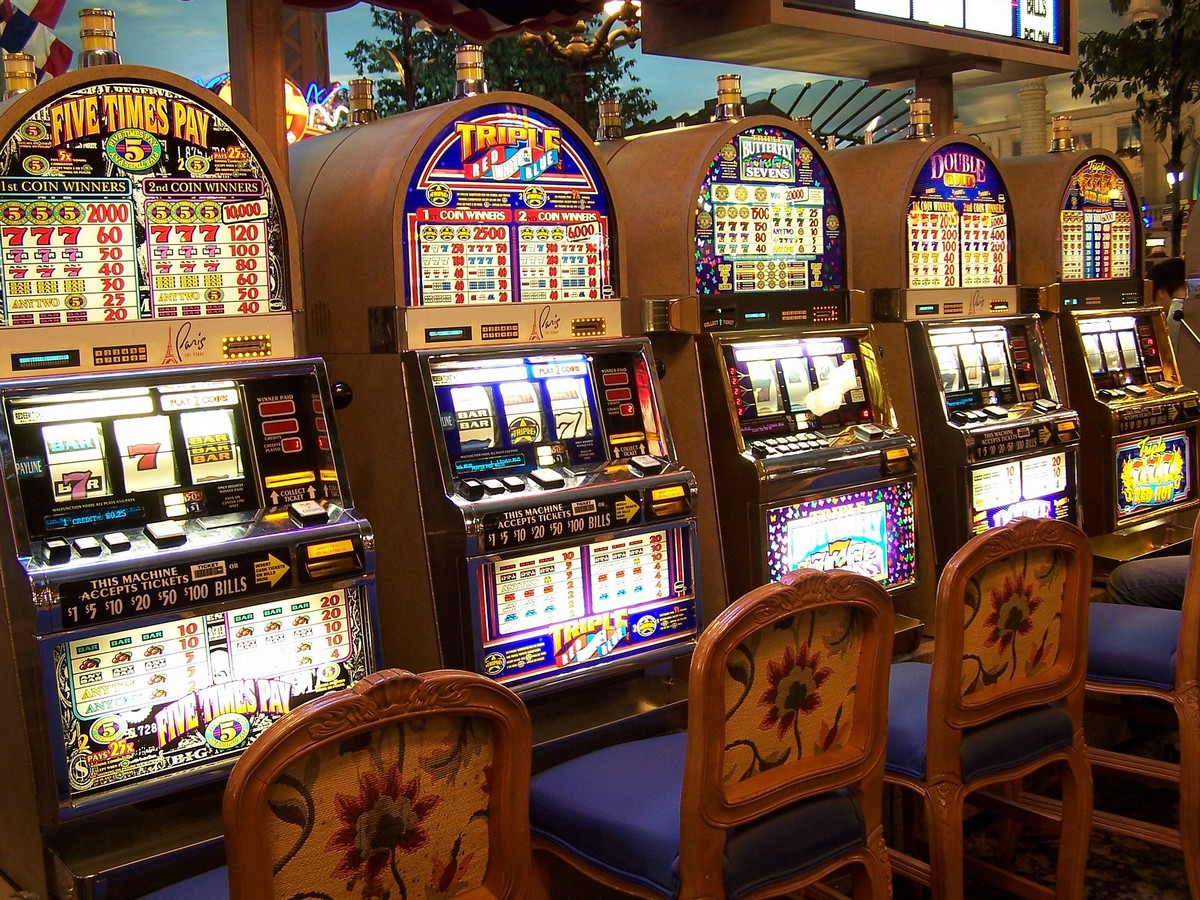
Special features and special features affect the RTP picture even more. A slot could advertise a 96.5% RTP, but that percentage usually hinges on triggering a bonus that gives 50 to 100 times your stake. If you don’t land the bonus, your personal return might linger approximately 30% to 40%. I have witnessed players chase bonus buys at Duelz, investing for direct access to free spins, and accidentally hurt their effective edge because the buy price is usually adjusted to keep the same RTP while accelerating variance. The house edge in feature buy slots does not vanish; it simply condenses into fewer spins, which can appear like a nicer deal but in mathematical terms is not. When I look at the Duelz slot collection, I notice that standard three‑reel titles frequently have worse RTPs than modern Megaways and Hold & Win games, yet the nature of lower volatility can allow your bankroll last longer. The key lesson is that RTP shows only a portion of the story. You must account for volatility, hit frequency, and the magnitude of the greatest possible win. I constantly suggest slot players to choose a game whose math profile suits their session length and risk tolerance, because pursuing the highest RTP without considering volatility can destroy a balance before the edge ever has a chance to stabilize.
Bonuses, Betting Conditions, and the Effective Edge
Offers are the area where the house edge becomes much trickier because the advertised numbers — 100% match, 200 free spins — mask an real edge that can be much higher than the games’ theoretical edge once you factor in wagering requirements. When I claim a welcome package at Duelz Casino, I do not check the bonus amount first; I move straight to the terms to find the playthrough multiplier. A 100% match bonus up to a certain amount with a 35x bonus wagering requirement means I must wager 35 times the bonus sum before any withdrawal. The house edge effectively eats into that bonus value with every spin and hand. If I use the bonus on slots with a 96% RTP (4% house edge), the expected loss during the wagering period erodes over a third of the bonus value. If I accidentally play a slot with a 94% RTP, that erosion intensifies. I have formed a basic mental calculation: multiply the house edge of the games you plan to play by the wagering multiplier. If the product beats the bonus percentage, you are mathematically to end up with less than your deposit before you can cash out. This does not make bonuses bad; it transforms them a math problem that most players never figure out. At Duelz, the gamified duels and spell collections occasionally grant extra free rounds or cash rebates, which can a bit reduce the net friction of wagering, but those perks are inconsistent and should never be counted on to rescue a punishing playthrough.
- Welcome match promotions with moderate wagering (30x–40x): Feasible if you choose high‑RTP slots and bypass table game contributions that are often counted at 10%–20%, meaning you would be required to wager five to ten times more on blackjack to satisfy the same requirement.
- Free spins winnings transformed into bonus cash: These commonly carry independent wagering requirements that compound with the deposit match, so be sure to check if the spins have their own playthrough multiplier before rejoicing over a big win.
- No‑deposit bonuses: Frequently come with a steep wagering multiplier (50x–60x) and limited max cashout cap, making their true value restricted.
- Cashback and rakeback: These generally come with no or very low wagering, which makes them among the most numerically beneficial promotions because they lower your effective loss without locking up your withdrawals.
What I examine at Duelz is not the highest amount in the banner but the terms that narrow the gap between the stated reward and its realizable worth. A lower bonus with 25x wagering can be more valuable in real money than a big offer with 45x wagering, once the house edge is factored in. I also consider excluded payment methods, as some casinos void bonus eligibility if you deposit with certain e‑wallets — information always tucked away in the T&C. The house edge does not halt during wagering; it continues to operate on every bet, so your bonus balance is under constant mathematical strain. Recognizing this changes bonus hunting from blind grabbing into a strategic process. At a platform that emphasises player duels and loyalty, like Duelz, I sometimes discover that the recurring loyalty rewards deliver a better long‑term edge mitigation than an upfront welcome bonus, especially if the loyalty points can be converted to cash with zero wagering. Exploring that path first often beats chasing a flashy sign‑up offer.
Card Games: Where Strategy Confronts the Boundary
Table games are the category where your decisions truly move the needle on the house edge, and that is why I dedicate a disproportionate amount of time on them whenever I review an online casino. At Duelz Casino, the RNG‑powered table game section covers roulette, blackjack, baccarat, and several poker variants, each with a house edge that can swing dramatically based on the ruleset. European roulette with a single zero offers a 2.70% edge, while American roulette with its double zero pushes the edge to 5.26%. I regard playing American roulette when European is available one of the costliest mistakes you can make, because you are essentially paying almost double the theoretical fee for a nearly identical experience. In blackjack, the house edge can go from below 0.5% with advantageous rules — dealer stands on soft 17, doubling allowed on any two cards, surrender available — to over 2% if the table uses 6:5 blackjack payouts or limits splitting. I always check the game rules before sitting down and look for the blackjack payout first. A 3:2 payout is fine; 6:5 is a house edge booster presented as a feature. Baccarat presents a clearer choice: a banker bet with a house edge of about 1.06% (after commission) and a player bet at 1.24%. The tie bet, with its 14% edge, is a sucker bet that I consistently avoid. Even on a sleek interface like Duelz, the math of these bets does not change. The software simply performs the same random deal that a physical shoe would, and over time the edge collects its toll.
What elevates table game play at an online casino is the lack of table pressure and the opportunity to consult strategy charts openly. I often hold a basic blackjack strategy card open on a second screen while I play; the casino has no objection because the edge already expects you will make the mathematically correct move. At Duelz, where the lobby encourages quick switching between games, I find it easy to shift from a low‑edge blackjack table to a high‑edge side‑bet heavy roulette wheel. The real discipline is preserving awareness of the edge you are accepting with each wager. Side bets like Perfect Pairs or 21+3 can be enjoyable, but they typically hold edges of 4% to 10%, which erodes your bankroll at triple the rate of the main bet. I view them as occasional garnish, never as a core strategy. The table game catalogue at Duelz also features video poker titles, which some players incorrectly classify with slots. Full‑pay Jacks or Better, when available, can provide an RTP exceeding 99.5% with optimal play, indicating the house edge drops to almost nothing. I check the paytables carefully because the same game title can conceal vastly different pay schedules. If you want the lowest possible house edge on the platform, seeking out a full‑pay video poker machine is arguably your best move, but it requires near‑perfect decision‑making on every hand.
Live Casino: The House Advantage in Live Casino Formats
Live casino games at Duelz Casino deliver a studio‑streamed experience that appears far removed from a sterile RNG product, yet the mathematical house edge is exactly the same as in their digital counterparts. When I enter a live blackjack table, the dealer draws real cards from a shoe, and the ruleset — number of decks, dealer stands or hits on soft 17, surrender options — establishes the edge somewhere between 0.4% and 0.8% for a basic strategy player. The human element adds entertainment value, but it does not change the probability of busting or the dealer’s conditional advantage. Live roulette wheels, often from Evolution or Pragamtic Play, are regularly checked for balance, and the single‑zero house edge of 2.70% holds across every spin. I consider live casino the most honest display of the house edge because you can literally watch the ball land in the pocket; no hidden algorithm can be suspected. That transparency, combined with the social chat features and the professional presenters, makes it simpler for me to accept the edge as a fee for the experience rather than a hidden tax. The critical difference in live play is pace. A live blackjack round lasts longer than an RNG round because of card handling and betting time windows. Consequently, you stake less per hour, which lowers your expected loss over a fixed session. That is a real, measurable benefit that many players overlook. A one‑hour session at a live table with a 0.5% edge might cost you half as much in theoertical loss as a rapid‑fire RNG blackjack game simply because you play fewer hands.
In situations where the live casino edge can balloon is in the side bets that live studios advertise heavily. Perfect Pairs, 21+3, Lucky Ladies, and a variety of lightning‑style multipliers all link to the main bet but work with independent, much higher house edges. I have observed Lucky Lady side bets carry edges exceeding 20%. The multiplier roulette variants, such as Lightning Roulette, lower straight‑up payouts from 35:1 to around 30:1 in exchange for random boosted numbers. The overall house edge on those numbers actually rises slightly, even though the max win potential turns flashy. I always treat such games as high‑risk entertainment, not as a core bankroll strategy. At Duelz, the live lobby tends to display minimum and maximum bet limits clearly, and I use that information to adjust my session budget so that I can handle the variance without busting out before the edge stabilizes. Live baccarat tables, especially squeezed versions, provide some of the lowest edges in the entire casino — just over 1% — with no strategy required, which is why I commonly advise them as a starting point for players who desire to engage with live dealers without memorising charts. The key is to keep to banker or player and skip the tie bet entirely. The edge in live baccarat is so thin that the main risk is not the math but the temptation to increase bet size after a streak.
Comprehending the Built-in Margin: The Unseen Operator
The house edge is the mathematical upper hand the casino maintains over the player on every bet, shown as a portion of the total bet. If a game has a 2% built-in margin, the casino aims to keep €2 for every €100 staked, over numerous of plays. This does not signify you drop €2 every time you bet €100; it signifies the theoretical long‑term return to the player (RTP) is 98%. In practice, volatility conceals the edge constantly. I have seen rounds where a 96% RTP slot delivers a 150% payout in an hour and different ones where it empties a bankroll brutally. The edge functions unseen in the background, accumulating its advantage across thousands of separate events that no single playing period can show. When I review a casino like Duelz, I always check the RTP variety of its game collection first, because those figures are the basic substance of every betting move. The casino advantage is not uniform across game classes. Slots usually have edges between 2% and 10%, while blackjack played with optimal basic strategy can lower the edge below 0.5%. Live dealer games sit someplace in between, often hovering around 1% to 3%, though side bets can raise that value much higher. A casino does not need to alter payoffs to win; the edge is hard‑coded into the mechanics and the payout chart, and over time it is essentially unstoppable. Your role as a player is to pick your contests based on that edge, not to battle the math itself.
What creates the house edge so unnoticeable is that it does not appear active while you play. A roulette wheel does not announce that it will keep 2.7 cents per euro, and a slot simply displays reels and sounds without a running tally of theoretical loss. The payment system also hides the edge because wins and losses are blended chaotically. At Duelz, where the interface is dynamic and duels between players add a social layer, the edge can appear completely absent during a hot streak. I find that the most dangerous moment is when you win big early, because your brain interprets the game as favourable and you overlook the long‑term math that will inevitably reassert itself. That is why I always recommend checking the theoretical RTP of each game before you load it. Slots providers publish the RTP in the game rules, and table games have fixed edges determined by the ruleset. Overlooking this information is like driving a car without knowing the fuel efficiency — you can still arrive at your destination, but you are operating blind. At a licensed casino, the house edge is also the guarantee that the platform is not cheating with manipulated software. A properly audited random number generator (RNG) works with a published paytable to create a provably fair mathematical framework. Without the house edge, a casino could not exist, and paradoxically, that very edge is what lets regulators verify fair play. So the edge is both your opponent and your proof of fairness.
Payment Mechanics and Withdrawal Schedules: The Secret Advantage of Cashflow
Although the mathematical house edge resides inside the games, a secondary edge emerges from the payment infrastructure — and it can affect you as surely as a bad paytable if you are not careful. Every day your withdrawal stays pending, your money remains in the casino’s ecosystem, exposed to the temptation of reversing it. I have lost count of how many times I have witnessed a player win a significant sum, request a cashout, then cancel the withdrawal during the pending window and eventually lose the lot. The pending period is not a flaw; it is a designed interval that provides the house an extra psychological advantage. At Duelz Casino, the payment methods I have come across include standard options like Visa, Mastercard, Skrill, Neteller, bank transfer, and sometimes Trustly or paysafecard. Each method has a different processing rhythm. E‑wallet withdrawals typically get confirmed within 24 hours once verification is complete, while card withdrawals may take 2–5 business days and bank transfers longer still. The house does not earn an explicit edge from the delay, but the practical effect is that faster payments lower your exposure to impulsive reverse‑withdrawal decisions. That is why I always prefer e‑wallets at any casino; the shorter the lock‑in period, the less chance I will undermine my own win. I also verify whether the casino imposes any withdrawal fees, because a flat fee of €2.50 on a €50 withdrawal is a 5% cut that dwarfs a 1% house edge on a blackjack table.
Funding also has an implicit edge if you disregard the speed and reliability of the transaction. A failed deposit or an unforeseen delay can push you to use a less known payment method that may have its own currency conversion fees. At Duelz, I always try a small deposit first to confirm that the channel works smoothly before risking a larger sum. Another factor I evaluate is the minimum withdrawal limit and the maximum cashout per transaction. If the minimum withdrawal is €20 and you win €15, that money is effectively trapped until you either deposit more or win enough to cross the threshold — a subtle mechanism that favours the house by keeping funds in player accounts. I view the payment section of any casino as part of the overall edge equation; a casino with fast, fee‑free, low‑barrier withdrawals in practice returns more value to the player than a mathematically identical platform that prolongs payments. The licensing and reputation of a casino like Duelz counts here too, because a platform that uses trusted payment providers and maintains segregated player funds is far more likely to process payouts without friction. I always verify the presence of SSL encryption and review the withdrawal policy before I even spin a reel, because those terms govern the final real‑world return on any winning session.
Licensure, Security, and Platform Trust: The User’s Protective Shield
The fundamental backstop behind every house edge calculation constitutes the regulatory framework within which a casino operates, and this is an area where I never compromise. When I review Duelz Casino, the first thing I scroll to is the footer to locate the licensing authority and the registration number. A reputable licence — commonly issued by the Malta Gaming Authority, the UK Gambling Commission, or another acknowledged European regulator — means the operator must subject its games to regular RNG audits, segregate player funds from operational accounts, and comply with responsible gambling protocols. These requirements make certain that the house edge you read in the game rules is the edge you truly face; without them, theoretical RTP figures are just marketing. I also check for third‑party testing seals from companies like eCOGRA or iTech Labs. Such certifications verify that the random number generators generate unpredictable results and that payback percentages match the published values. The security layer built on SSL encryption and PCI‑DSS compliance protects your personal and financial data, but it does not directly affect the house edge. However, a breach or a shady operator can inflict a 100% edge if your funds are lost, so security is a prerequisite for any discussion of edge. At a platform like Duelz, where the gamified elements feature peer‑to‑peer duels, I appreciate that the licence also governs fairness in those competitive features, guaranteeing that spells and boosts are distributed according to transparent rules rather than arbitrary operator decisions.
Mobile functionality is an additional pillar of trust that affects how dependably you can execute your strategy. I have tried Duelz Casino across iOS and Android devices, and the mobile-friendly interface — or a dedicated app if present — provides the complete game selection without changing the underlying mathematics. The house edge does not vary whether you press a spin button on a smartphone or click it on a desktop, but a badly optimized mobile interface can cause mis‑clicks or slower decision‑making, which in live dealer games can occasionally affect your bet placement window. I value a reliable mobile experience because it enables me verify RTPs, change wagers, and handle withdrawals no matter where I am, maintaining my control even when I am away from a desk. The responsible gambling features that come with a reputable permit — deposit limits, reality checks, time‑outs, and self‑exclusion — also act as a individual risk buffer. Setting a loss limit before a session effectively caps the house’s maximum gain and prevents a bad run from becoming a disaster. I always enable at least one limit whenever I sign up at a new casino, and Duelz supplies these tools within the account section. At the end of the day, the blend of a trusted permit, transparent game audits, protected transactions, and strong mobile performance creates an environment where the house edge is just what the math says it is — no more, no less — and that is the sole basis on which a intelligent player should ever build a bankroll strategy.
